
Utah Office | USA/Canada
Call or Text | +1 (801) 899-6806
Email Support safari@allinafricasafarisusa.com
Office Hours: M-F 9:00 am - 5:00 pm MST
Off: US Holidays
Off: US Holidays
By Barton Jeffs, Owner
When planning an African safari, the ultimate goal for many is the mountain gorilla. Because these gentle giants reside in only one region on Earth, your real choice for gorilla trekking Uganda vs Rwanda comes down to three operational factors: budget, logistics, and travel style.
This is where we step in. As a retired US Army Counterintelligence Officer, I built my career on analyzing data to ensure favorable outcomes. I apply that same scrutiny to your travel plans.
Through All in Africa Safaris USA, my Utah-based office handles your contracts and banking under US law. My partners at All in Africa Safaris (U) Ltd in Kampala handle the ground logistics. We have worked together since 2017. This structure bridges the gap between American financial safety and local African expertise.
Before we compare the logistics of gorilla trekking in Uganda vs Rwanda, you should understand how we operate. Our goal is “Inclusive Adventure: 100% Private Safaris at Group Tour Prices.”
We believe you shouldn’t have to sacrifice privacy to afford an African safari. By working directly with our Kampala-based office, we cut out the middleman. This allows us to offer premium, private experiences at a lower price point.
What is private: You have a private 4×4 Land Cruiser and a dedicated driver/guide. You never share a vehicle with strangers. This is your journey.
What is shared: Government regulations require that gorilla trekking be done in small groups (maximum 8 trekkers). Your journey is private; the wildlife encounter is shared.
Uganda is home to over half of the world’s remaining mountain gorillas. Most live in Bwindi Impenetrable National Park, with a smaller population in Mgahinga Gorilla National Park.
The primary reason travelers choose Uganda is value. A standard permit here costs $800 per person — nearly $700 less than Rwanda’s permit. We can reallocate those savings toward higher-end lodging or extra activities like chimpanzee trekking.
Uganda offers a unique benefit called the Gorilla Habituation Experience, available only in the Rushaga sector of Bwindi. Standard treks allow one hour of viewing. The habituation trek allows four hours with a gorilla family, for $1,500 — the same price as a one-hour trek in Rwanda, but with four times the viewing time.
The terrain in Uganda is why the park is named “Impenetrable.” It is steep and thick with vegetation. The drive from Entebbe to Bwindi is approximately 9 to 10 hours. We solve this by booking scheduled domestic flights to the Kihihi or Kisoro airstrips, or by using the “Kigali Route” — picking you up in Rwanda and driving 4 hours across the border into Uganda, saving a full day of driving.
Rwanda brands itself as a high-end destination. Trekking takes place in Volcanoes National Park, where Dian Fossey conducted her famous research.
Rwanda is the most efficient option for travelers with limited time. The park is just 2.5 hours from Kigali International Airport — you can fly in, trek the next day, and fly out. That convenience comes at a price: the permit costs $1,500 per person for one hour, making Rwanda the more expensive of the two.
Rwanda is home to some of the most famous luxury lodges in the world, including brands like Singita and One&Only. If you want an ultra-luxury experience with minimal transit time, Rwanda is the clear winner. We handle the planning for these high-end stays so your transitions are seamless.
| Feature | Uganda | Rwanda |
|---|---|---|
| Permit Cost | $800 | $1,500 |
| Trek Difficulty | Moderate to Strenuous | Moderate |
| Travel Time | 9 hrs (drive) / 1 hr (fly) | 2.5 hrs (drive) |
| Best For | Value & longer stays | Luxury & convenience |
If you choose to see both Uganda and Rwanda, we help you secure the East African Tourist Visa. This $100 visa allows multiple entries between Uganda, Rwanda, and Kenya — much cheaper than buying individual visas for each country.
Many travelers are nervous about sending thousands of dollars to an overseas bank account. That’s a valid concern. When you book gorilla trekking in Uganda or Rwanda through us, you’re protected by US law.
We bridge the gap. You get the safety of a US business and the deep knowledge of a local team.
The day begins early. We drive you to the park headquarters by 7:30 AM. You’ll be assigned to a gorilla family based on your fitness level. Park rangers give a safety and etiquette overview, then the hike begins — it can take anywhere from 30 minutes to 6 hours to find the gorillas. Once found, you have exactly 60 minutes to observe them.
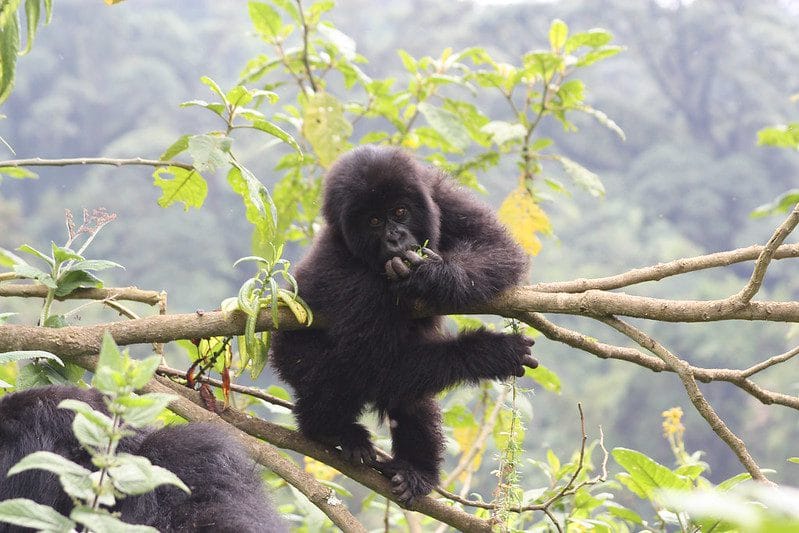
It’s a quiet, profound experience. You’ll see them grooming, playing, and eating. The silverback, the leader of the family, is often a peaceful but massive presence.
We don’t recommend you “research and book” this trip alone. The permit systems in Uganda and Rwanda are complex, and permits sell out months in advance. Our service includes:
Whether you choose the value of Uganda or the luxury of Rwanda, we ensure the logistics are handled — reducing your stress so you can enjoy the adventure.
Yes. In both Uganda and Rwanda, trekking is a highly regulated activity. You are escorted by professional, armed park rangers who track the gorilla families daily, protecting both you and the wildlife. We also recommend reviewing the US State Department’s travel advisories and the CDC’s travelers’ health guidance before your trip; we monitor these updates as part of our own planning process.
Rwanda’s terrain in Volcanoes National Park is generally more open and less steep than Bwindi. Bwindi offers different sectors, and we can request easier trekking groups for clients with mobility concerns. We always recommend using a porter to help carry your gear.
Absolutely. Most of our clients combine gorilla trekking with a savannah safari. In Uganda, we can take you to Queen Elizabeth National Park to see tree-climbing lions. In Rwanda, you can visit Akagera National Park.
Unlike many African tour operators, we do not require overseas wire transfers. You pay All in Africa Safaris USA through standard US banking channels, keeping your money safe and the process simple.
The dry seasons — June to August and December to February — are best, with less muddy trails. Gorillas can be tracked year-round.
Ready to start planning your private African safari? Contact All in Africa Safaris USA today for your personalized itinerary.