
Utah Office | USA/Canada
Call or Text | +1 (801) 899-6806
Email Support safari@allinafricasafarisusa.com
Office Hours: M-F 9:00 am - 5:00 pm MST
Off: US Holidays
Off: US Holidays
A complete safari often goes beyond the wildlife. Visiting Uganda cultural sites provides deep insight into the region's diverse ethnicity and history. From ancient royal burial grounds to ethnographic collections, these stops add significant value to your journey.
We integrate visits to these important landmarks seamlessly into your itinerary. We handle the logistics of navigating Kampala and other regions so you can focus on the history. Exploring Uganda cultural sites with us ensures you have safe, reliable access to the country’s heritage.
This service is designed for travelers who want a comprehensive understanding of the country they are visiting. It is perfect for history enthusiasts and those curious about the traditions of East Africa.
If you appreciate educational travel and want to connect with the local story, adding Uganda cultural sites to your trip is essential. We create a structured, comfortable environment for you to learn about the people who call this land home.
We manage all aspects of your cultural excursions. We do not leave you to navigate busy city streets or ticket counters alone. Our service for Uganda cultural sites includes:
Private Transportation: We provide a private 4x4 Land Cruiser for all transfers between sites.
Entry Fees: We pre-pay all admission costs for museums and heritage sites.
Expert Local Guides: We arrange for site-specific guides who are experts in their particular location.
Itinerary Integration: We schedule these visits to fit logically within your broader safari plan.
Note on Shared Experiences: While we provide 100% Private Safaris at Group Tour Prices, please note that museums and public heritage sites are open to the general public. Your journey is private; the cultural encounter is shared.
We structure our business to provide peace of mind while traveling in Africa.
US Financial Protection All in Africa Safaris USA is based in Utah. We manage the planning and financial side of your trip. You sign a US contract and pay into a US bank account. This eliminates the risk and stress associated with international wire transfers.
Expert African Execution Our partner, All in Africa Safaris (U) Ltd, is based in Kampala, Uganda. Established in 2017, they handle the on-the-ground logistics. They know the best times to visit specific Uganda cultural sites to avoid crowds and have established relationships with site managers.
Navigating urban centers like Kampala to visit Uganda cultural sites can be overwhelming for first-time visitors. Traffic is heavy and directions can be unclear. We remove these logistical hurdles.
We ensure you are picked up and dropped off at the door. Our local driver-guides act as your safety escort and translator. You get the depth of a cultural immersion with the safety net of a professionally managed tour.
We arrange visits to the Uganda National Museum, one of the premier Uganda cultural sites. Established in 1908, it houses a vast ethnographic collection covering agriculture, hunting, and religion. We guide you through displays of traditional huts representing various tribes of Uganda.
For those interested in research or literature, we can arrange access to the Uganda Society Library located within the main building. It contains rare, out-of-print books regarding Uganda’s history. You can learn more about the museum's collections on the Uganda Museums official website.
We coordinate tours of the Kasubi Tombs, a UNESCO World Heritage site steeped in Ganda cultural history. This site serves as the burial ground for four Kabakas (Kings) of Buganda. It is widely considered one of the most important Uganda cultural sites. You can read about its significance on the UNESCO World Heritage Centre website.
Your visit includes a look at the traditional architecture. You will see large huts built from poles, reeds, and thatch. We ensure you see the collection of royal artifacts, including traditional musical instruments, weapons, and shields.
We connect you with the site guides, often descendants of the royal family. They maintain the tombs and share their oral history directly with you. This personal connection makes the Kasubi Tombs tour a highlight of many itineraries focusing on Uganda cultural sites.
Yes. We only include Uganda cultural sites that are secure and well-managed. Your private driver-guide accompanies you to the entrance and ensures your safety throughout the visit. We monitor local conditions in Kampala daily.
Yes, particularly at the Kasubi Tombs. Modest dress is required out of respect for the royal grounds. We recommend long pants or skirts. We provide specific packing and dress advice before you depart for your Uganda cultural sites tour.
Photography rules vary by site. Generally, photos are allowed in the Uganda Museum. However, photography may be restricted inside specific buildings at the Kasubi Tombs. Your guide will advise you on the specific protocols at each of the Uganda cultural sites.
Most Kampala cultural tours take between 2 to 4 hours. We usually schedule them at the beginning or end of your safari when you are in the capital city. We adjust the pace based on your interest level.
Ready to start planning your private African safari? Contact All in Africa Safaris USA today for your personalized itinerary. https://allinafricasafarisusa.com/contact-us
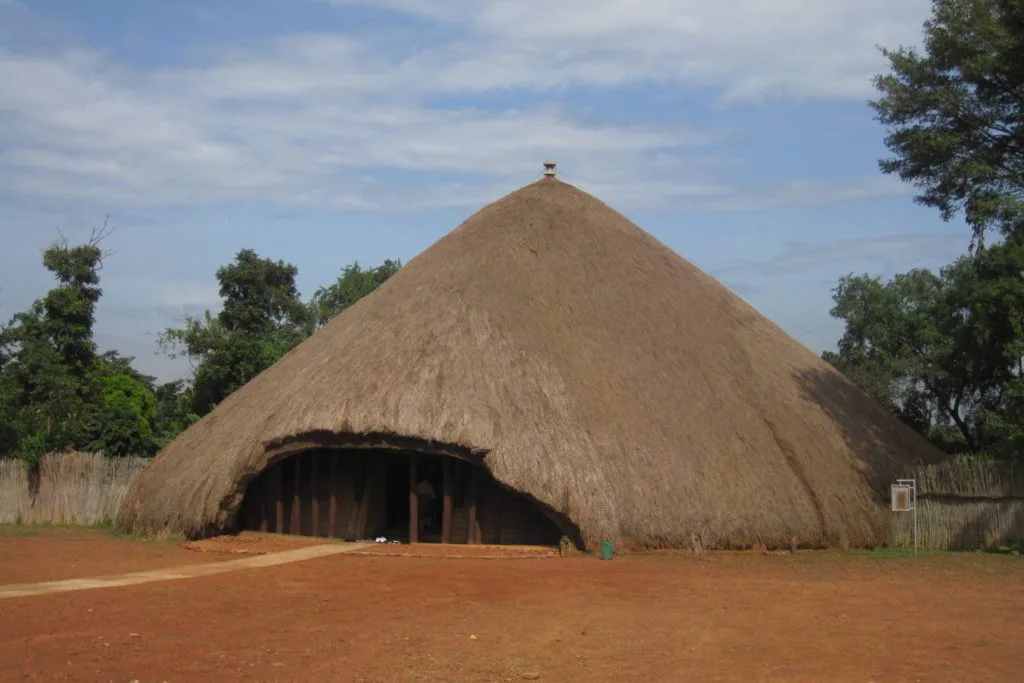
Wamala Tomb
Wamala is little known in comparison to Kasubi and not as well tended but is an equally fascinating place for a spot of culture. It is the resting place of Kabaka Mutesa I’s father and Suuna his predecessor.
The tomb is housed in an attractive, traditional, thatched and domed building. Opposite the main building stands the tomb of Namasole, King Suuna’s mother who is reputed to have been an extraordinarily beautiful woman whom the King was so fond and possessive of. Displayed is an array of royal artifacts which include spears, shields, drums and other musical instruments. It’s found in central Kampala at Nansana.
Nkokonjeru Tombs
They contain the tombs of the last two Kings of Ankole, Omugabe Edward Solomon Kahaya II, who died in 1944, and Omugabe Sir Charles Godfrey Rutahaba Gasyonga II who died in 1982 after ruling for 23 years. The tombs are inside a lone almost derelict colonial style house and are two concrete slabs. They are in Mbarara in Nkokonjeru.
Naggalabi Buddo Coronation Site
It is the place where all Buganda Kings including the current Ronald Mwenda Mutebi II are crowned in accordance to Ganda culture and tradition. There are several huts similar to those at Kasubi Tombs as well as a natural throne from a tree root. It’s a short distance off the road to Masaka.
Kingdom’s Palaces
In pre-colonial times, Uganda was organized into Kingdoms and chiefdoms which were like a curtain that when drawn, divided up Uganda ethnically but when opened revealed an autonomous and cohesive people, so different yet so alike in many ways. These notably were Buganda, Busoga, Toro, Ankole and Bunyoro Kingdoms while chiefdoms and cultural leaders were found among the Eteso, Acholi, Alur, Japadhola, and Bagisu among other tribes. In colonial Uganda, the colonial administrators didn’t attempt to abolish these units but in post-colonial Uganda, the late first president Sir Apollo Milton Obote did to neutralize the threat he felt Buganda’s monarchy posed to his hold on power. However, just as Obote abolished them to his political advantage, Uganda’s current President reinstated them to his. Today their palaces are cultural treasure troves.
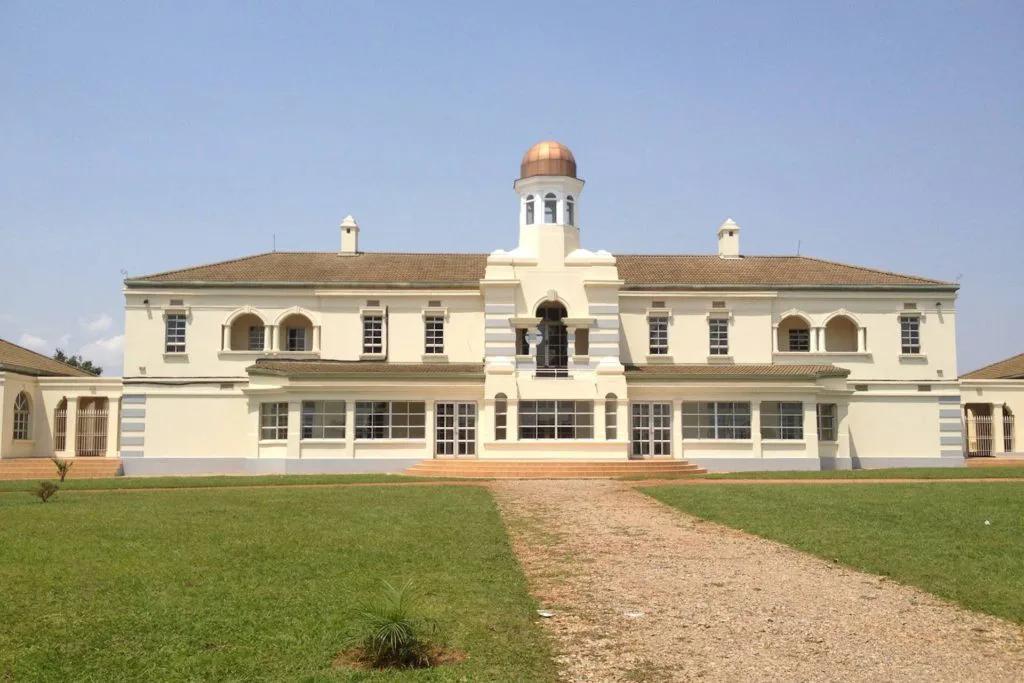
Buildings of Buganda Kingdom
What is now Kampala city is part of Buganda, and in pre and post-colonial times when Kingdoms were supreme, it was the heart of the kingdom, and consequently a number of royal buildings and impressive administrative centers are to be found. Among these are the Kabaka’s Palace in Bulange in Mengo, the Buganda Parliament located at the end of a ceremonial driveway-Kabakanjagala Road leading from the palace, and the Buganda Court of Justice, now the location of the Uganda’s National Court.Of these, the Buganda Parliament is one of the most impressive colonial-era buildings in Uganda.
Religious Buildings:
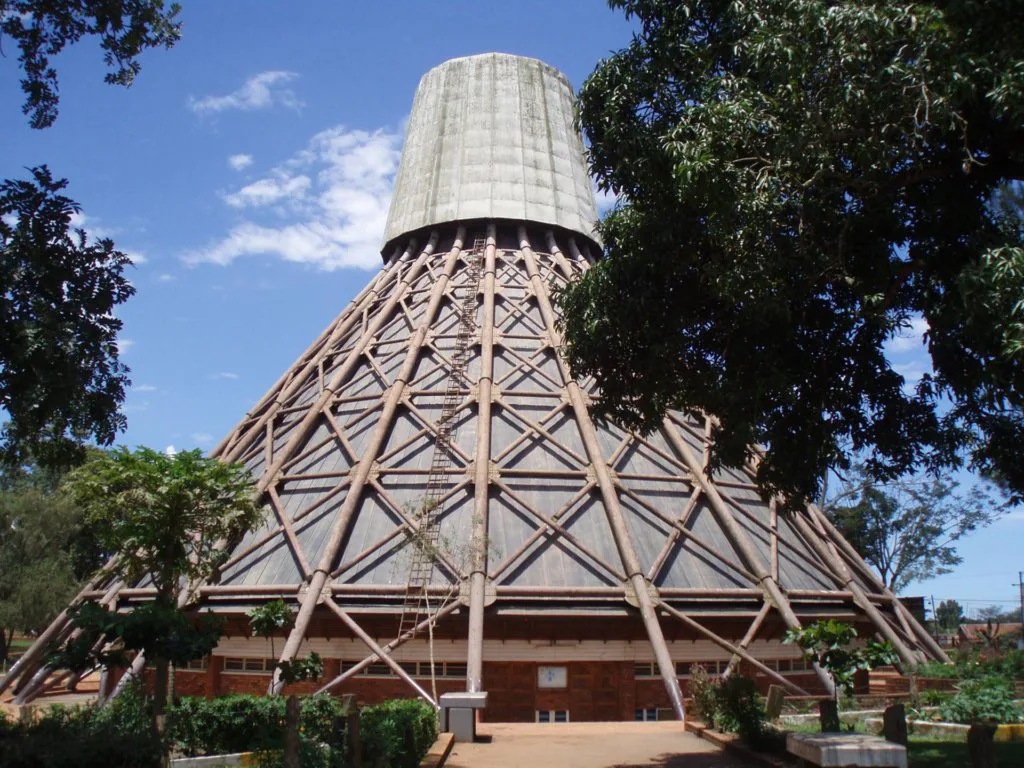
There are several prominent religious buildings of interest. Notable among these are the huge domed Roman catholic Rubaga Cathedral on Rubaga Hill, the twin-towered Anglican Namirembe Cathedral on Namirembe Hill, the elaborate and enormous Hindu Temples in the city Center, the beautiful Baha’i Temple outside the city, the gleaming white Kibuli Mosque dominating Kibuli Hill and the exquisite Gaddafi Mosque named after Libyan President Colonel Muhammar Gaddafi because his benevolent funding built the mosque. All of these buildings are captivating but Baha’i Temple is distinct because it’s the only one of its kind in the whole of Africa and consequently, the continent’s religious home for Baha’i faith. It’s located on Kikaaya Hill 6 km from Kampala City on Gayaza road. At Baha’i Temple just like at the other religious buildings, not only will its beauty be appreciated but an understanding of this obscure faith is enabled.
Kabaka’s Trail
It reveals the secret history of the Buganda people. Six sites make up the trail and all are around Kampala which has always been part of Buganda from time immemorial, and these include several tombs, a prison and a water fall. It’s definitely worth following to discover some “secrets” that were so well guarded in the past.
Katereke Prison
It was constructed by Kabaka Kalema who ascended the Buganda throne controversially in 1888 after Kabaka Mwanga was forced into exile. It is part of the Kabaka’s trail. Insecure, Kalema rounded up every potential person he imagined was a threat to his reign and sent them to Katereke. Royals and peasants alike were incarcerated. Among the unfortunates was Kiwewa who was an interim King and ruled briefly from the time of Mwanga’s exile to Kalema’s ascent to the throne. Together with his wives, two of Mwanga’s infant sons and even Kalema’s own brothers and sisters were killed at Katereke. These killings wrought his down fall and brutal death which was not only to avenge the deaths but was also to stop him for he was starved for seven days and shot in the head.
Namugongo Martyrs’ Shrine
Namugongo was an execution site in pre-colonial Buganda and death was by hacking. Before incursions of foreigners Buganda and other societies practiced African religion and steeped in myth, superstition, witchcraft and the supernatural. But with the coming of foreigners, other religions were introduced converts soon grew. The first foreigners were the Arabs who were Islam and Mwanga converted to the new faith. Next came the Europeans of the Christian faith- Roman Catholics and Protestants, shortly after each other but also got new followers. Mwanga zealous to protect his new faith rounded up a number of his subjects- men and women, young and old, among whom were a good number of his pages, and marched them naked to Namugongo where he asked them to renounce their faith in exchange for clemency. One final opportunity to renounce their new faith was given on the morning of 3rd June whether this opportunity was taken remains unknown for there are no records. However, for the 26, evenly distributed between Protestant and catholic who obstinately refused, the end was a gruesome one, preceded by the on spot hacking and burning of Charles Lwanga the leader of the Catholics. And the remaining were burnt later in the day, tightly bound and thrown into a pyre alive. The shrine was built in their memory and yearly Christians from all over the world make a pilgrimage to the site and those from East Africa – Uganda, Kenya and Tanzania trek .It’s found in Namugongo a few minutes’ drive from Kampala.
Ghandi’s Shrine
Ghandi’s Shrine in Uganda it comes as a bit of a surprise, doesn’t is? Well, there really is Ghandi’s Shrine in Uganda, near the Source of the Nile. Upon Ghandi’s death in 1948, his ashes were divided up and sent too many locations around the world to be scattered, and some ended up in the Nile River at Jinja. Near the source of the Nile plaque is a small memorial garden commemorating Mahatma Ghandi, the centerpiece is a bronze bust donated by the Indian government. The place is becoming a pilgrimage site for Ugandan Indians.
Rock Art of Teso
Prehistoric rock art typically in red or white is found in eastern Uganda, in the Teso Districts of Kumi and Soroti. They are found in Nyero, Kakoro, Obwin Rock, Ngora and Lolui Island on Lake Kyoga. Little is known about the artists but in order to paint, they sourced from natural materials. Red pigments were created by scraping the surface of red rock while the white paint from a mix of clay, dung and sap. Of these paintings, the ones at Nyero are more expressive but all are worth a visit for their archaeological and prehistoric import and interest.
Nsongezi Rock Shelter
It’s one of the most important Stone-Age Sites in Uganda. Excavations have yielded a large number of stratified pottery shards dating as far back as 1000 AD into the 19th century which collectively represents the various style ranges characteristic of the period. Found 75km south of Mbarara near Kikagati a former mining center along the Tanzanian border, its worth visiting if interest in archaeology is more than a passing one.
Ntusi and Bigo Bya Mugenyi Earthworks
Ntusi is the site of what was the most ancient large human settlement which even predates the Bachwezi known as the first people. Although evidence of iron smelting, ivory and wood carving and large amounts of pottery have been found, one of the most unusual findings at Ntusi is a small fired clay cylinder covered in knobs- thought to have been used for ritual divination, and the Ntusi Mounds which are two immense mounds locally known as the male and female mound. Excavations have shown them to be deposits of over 300 years. There are several scraped depressions scattered around the village, the largest being the 20m deep Bwogero depression which lies 150m from the male mound.
Bigo Bya Mugenyi is the largest and most archaeologically important. Bigo Bya Mugenyi literally translates to mean “Fort of the Stranger” but according to tradition, the earthworks were excavated to protect the Chwezi Empire from incursion from the foreign Luo from Sudan. Most of the earthworks are deep and excavated from solid rock. Found in Fort Portal, Ntusi is a walk-able distance from the District Headquarters whereas Bigo is much further and can be got to in a 4X4, although a bicycle is the best way to get there. Ntusi and Bigo are worth visiting for their historical and archaeological importance.
Munsa Earthworks
Munsa Earthworks are the second largest in Uganda. Their name is derived from the Runyoro expression Mu-esa, which means ‘place of trenches’. The earthworks consist of a network of trenches. The earthworks are 7m wide and 3 feet deep and V shaped and were definitely excavated to safeguard the Bachwezi from possible outside attacks. The Bikekete Hill which is surrounded by the Earthworks is of particular interest because recent archaeological studies have revealed discoveries of an intact clay furnace used smelting iron, glass beads suggesting trade with coastal Swahili and a royal burial chamber deduced as such from the evidence of human skeletons with one underneath the other- a burial accorded kings in which a subject was buried with the King to look after him in the afterlife. At Bikekete Hill there is also a cave once inhabited by a Chwezi Prince- Kateboha. The earthworks are found in Mubende, about 40km north.
Nakayima Tree
It is an unusual tree steeped in spirituality. The tree is a towering 40m in height, many centuries old and supported by buttressed roots that from the base create numerous hollows and in these the spirit of Nakayima, a sorceress is believed to be resident. Although the last sorceress died almost 100 years ago, it’s an active shrine visited by believers and worshippers hoping for Nakayima’s blessings. These make offerings of coins and cowrie shells while her followers occasionally spend nights by the tree and sacrifice a goat or pig as offering to the sorceress. The tree is found on the top of Mubende hill.
These are not all of Uganda’s cultural attractions for Uganda is a country that brims with richness culturally.